Albany County LLC Strategy: Legal Risks? (2026)
The Albany County publication strategy is legally sound. Changing your LLC's county through a Certificate of Change (DOS-1359-f) is a standard procedure under Section 211-A of the NY LLC Law. Once the Department of State accepts the filing, your LLC's county of record is Albany — and Section 206 requires publication in the county listed on your filed documents, not the county where you physically work. There is no known New York case where a court invalidated an LLC's publication because the owner used a low-cost county.
Albany County Strategy: Key Facts
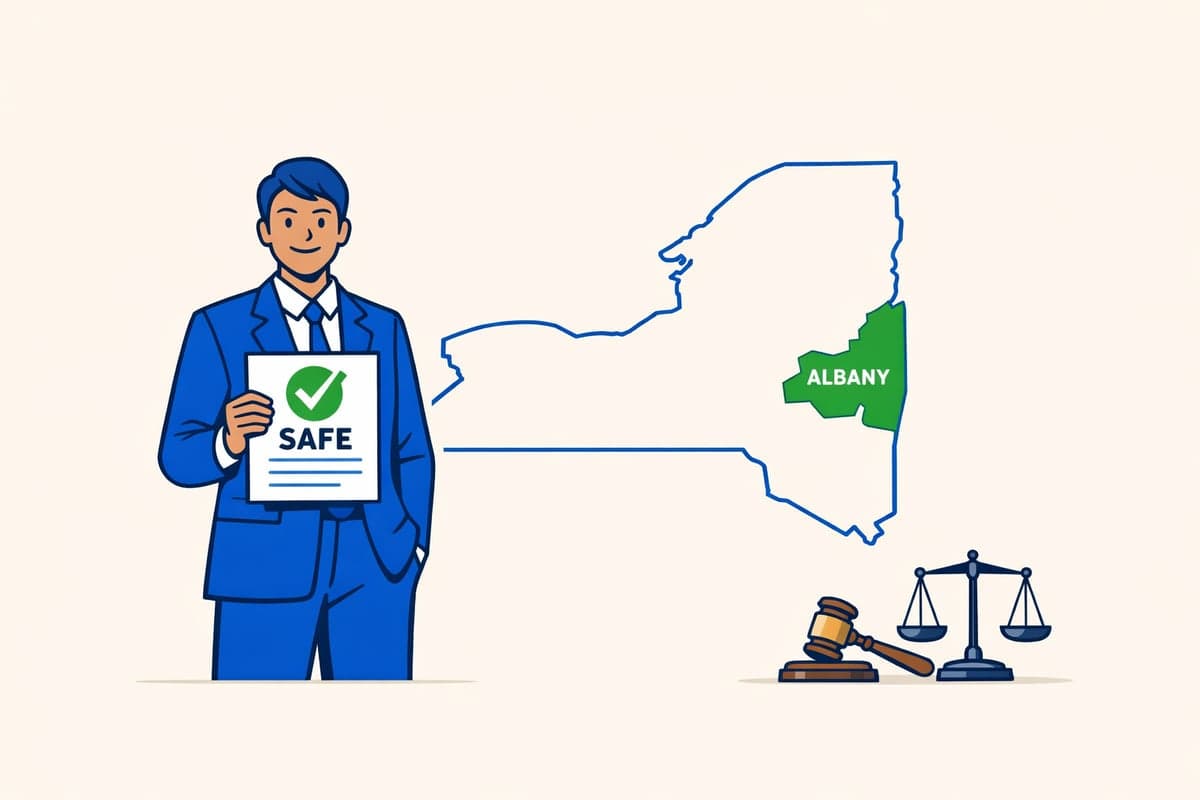
Why LLC Owners Worry About the Albany Strategy
The Albany County publication strategy saves LLC owners hundreds — sometimes over a thousand dollars — on publication costs. Albany County publication costs $180-$350+ for DIY, compared to $1,400-$1,900+ in Manhattan.
The strategy works like this: you file a Certificate of Change to update your LLC's office address to an Albany County address (typically through a registered agent), then publish in Albany's designated newspapers instead of your original county's more expensive ones.
This raises a common concern, especially on Reddit: "If I publish in Albany but actually operate in NYC, could an opposing attorney use that against me in a lawsuit?"
It is a reasonable question. Let's examine what the law actually says.
What Section 206 Actually Requires
Section 206 of the NY LLC Law specifies that publication must occur in the county in which the office of the limited liability company is located, as stated in the Articles of Organization or any filed amendment.
The critical phrase is "as stated in" — the statute ties the publication requirement to your filed documents with the Department of State, not to where you physically sit, where your customers are, or where you conduct business day-to-day.
When you file a Certificate of Change (DOS-1359-f), the Department of State updates your LLC's county of record. From that point forward, your legal county — for publication purposes — is Albany County.
Section 206 ties publication to the county stated in your filed documents with the Department of State — not where you physically work.
The Theoretical Legal Argument Against the Strategy
In litigation, an opposing attorney could hypothetically argue:
- "The LLC's publication was in the wrong county" — claiming your Albany publication didn't provide meaningful notice in the county where you actually operate.
- "The county change was a sham" — arguing the Certificate of Change was filed solely to reduce publication costs, not because you have a genuine business presence in Albany.
- "The LLC wasn't properly formed" — asserting that publication non-compliance undermines the LLC's corporate protections.
These arguments sound concerning in the abstract. Here is why they are unlikely to succeed.
Why the Albany County Strategy Holds Up
1. The Certificate of Change is a standard, state-approved filing.
The Department of State accepts and processes Certificates of Change routinely. There is no requirement that you prove physical operations in the new county. The form asks for the new address — it does not ask you to justify why you are changing it. When the DOS accepts your filing, your county is legally changed.
2. Section 206 is clear: publish where your documents say.
The statute does not say "publish where you conduct most of your business." It says publish in the county stated in your filed documents. If the legislature intended a physical-presence test, they would have written one.
3. Using a registered agent address in Albany is standard practice.
Thousands of New York LLCs use registered agent addresses that differ from where the owner physically works. A registered agent's Albany address is a legitimate office address for an LLC. This is exactly what registered agents exist for — to provide a legal address for service of process and official correspondence.
4. No reported case has invalidated publication based on county choice.
Despite the Albany strategy being widely used for years, there is no known published New York case where a court found that an LLC's publication was invalid because the owner chose a low-cost county through a Certificate of Change. Courts have dismissed lawsuits for failure to publish at all, but not for publishing in the "wrong" county when the LLC's filed documents supported the choice.
5. Publication's purpose is public notice — any county satisfies this.
The purpose of Section 206 is to provide public notice that an LLC has been formed. Publication in Albany County newspapers achieves this purpose. The notice contains your LLC's name, county, registered agent, and formation date — the same information regardless of which county's newspapers run it.
What About Piercing the Corporate Veil?
Veil-piercing arguments typically focus on whether an LLC was used to commit fraud or whether the owner treated the LLC as an alter ego (commingling funds, no Operating Agreement, etc.). The county in which you published is not a recognized factor in veil-piercing analysis under New York law. However, maintaining general corporate formalities — including completing publication — strengthens your LLC's liability protections.
How to Use the Albany Strategy Correctly
To minimize any theoretical risk, follow the proper procedure:
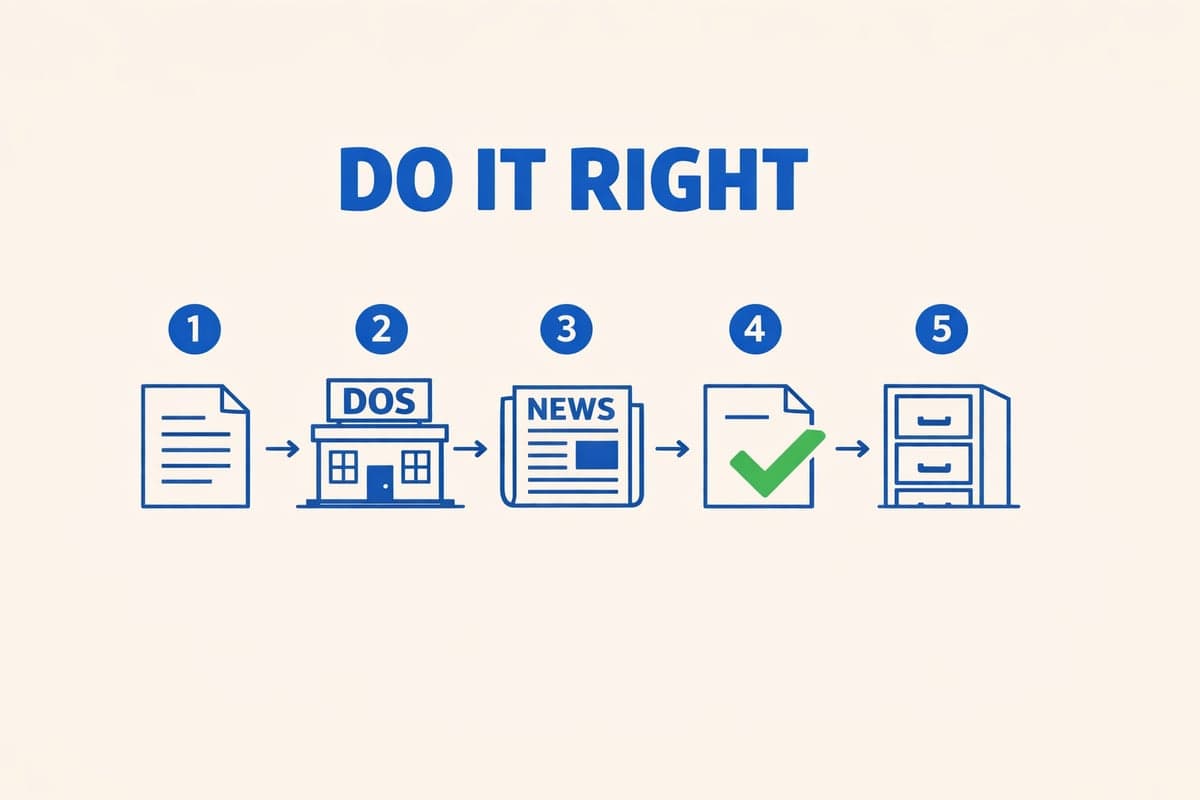
- File the Certificate of Change (DOS-1359-f) first — Update your LLC's county from the original to Albany. The filing fee is $30. See our step-by-step guide.
- Wait for DOS to process the change — This typically takes 4-6 weeks for standard processing, or faster with expedited processing.
- Then publish in Albany County — Use the newspapers designated by the Albany County Clerk for publication.
- File your Certificate of Publication — Submit DOS-1708 listing Albany County.
- Keep your records — Retain your Certificate of Change filing receipt, publication affidavits, and Certificate of Publication as part of your corporate records.
The key is doing things in the correct order: change the county before you publish. Publishing in Albany County while your filed documents still list Manhattan would be the actual problem.
Need help with the Albany strategy?
We handle the Certificate of Change and Albany County publication end-to-end.
Get StartedHow We Maintain This Data
This article reflects current New York state law as of February 2026. Our information is based on:
- Section 206 of the NY LLC Law — the publication requirement statute
- Section 211-A of the NY LLC Law — the Certificate of Change statute
- NY Department of State LLC resources — official forms and filing guidance
- Certificate of Change form (DOS-1359-f) — the official form
- Legal commentary on county-change strategies for LLC publication
- Our direct experience processing county changes and Albany County publications
Last verified: February 2026
FAQ
Is it legal to change your LLC's county just to save on publication?
Yes. Filing a Certificate of Change is a standard procedure under Section 211-A of the NY LLC Law. The Department of State does not require you to explain your reason for changing counties. The form asks for your new address — there is no physical-presence test or business-activity requirement.
Could an opposing attorney challenge my publication in Albany County?
An attorney can argue anything in litigation, but this argument faces significant obstacles. Section 206 ties publication to the county on your filed documents — not to where you physically work. If your Certificate of Change was accepted by the Department of State, your county is legally Albany. No published New York case has invalidated an LLC's publication based on using a low-cost county through a Certificate of Change.
Does using a registered agent address in Albany look suspicious?
No. Using a registered agent's address is standard business practice. Thousands of New York LLCs list registered agent addresses that differ from the owner's physical location. This is exactly what registered agents exist for — to provide a legal address for service of process and official correspondence. Courts and the Department of State are familiar with this practice.
What if I already published in Albany but never filed a Certificate of Change?
This could be a problem. If your Articles of Organization still list a different county (like New York County) and you published in Albany County, your publication may not comply with Section 206. The statute requires publication in the county stated in your filed documents. Contact a publication service or attorney to evaluate your options, which may include filing a Certificate of Change and republishing.
How much does the Albany County strategy actually save?
Savings depend on your original county. Manhattan (New York County) LLCs save the most — publication drops from $1,400-$1,900+ DIY to $180-$350+ DIY. Brooklyn (Kings County) owners save less but still meaningfully. The Certificate of Change filing fee is $30. For a full cost comparison, see our county-by-county guide.
Should I change my county back after publication?
This is optional. There is no requirement to change your county back to your original after completing publication. Some LLC owners prefer to keep the Albany address for ongoing correspondence, while others file another Certificate of Change ($30) to update their address. Your publication obligation is complete regardless.
Disclaimer
The information in this article is for general informational purposes only and does not constitute legal advice. While we strive for accuracy, laws and procedures may change. The discussion of litigation risk is based on general legal analysis of Section 206 and publicly available case law — it is not a guarantee of how a specific court would rule in your case. For specific legal questions about your LLC's publication strategy or litigation exposure, consult with a qualified attorney. LLC Publishers provides publication services and administrative filing assistance, but we are not a law firm and cannot provide legal advice.
Key Takeaways
- The Albany County strategy is legally sound — it uses standard procedures (Certificate of Change under Section 211-A) accepted by the NY Department of State
- Section 206 ties publication to your filed documents — not to where you physically work or where your customers are
- There is no known New York case where a court invalidated an LLC's publication because the owner chose a low-cost county through a Certificate of Change
- The Certificate of Change is a standard, state-approved filing — DOS does not require justification for changing counties
- Using a registered agent address in Albany is common, legitimate practice for thousands of New York LLCs
- To do it correctly: file the Certificate of Change before publishing — this is the critical step
- Veil-piercing arguments focus on fraud and commingling — not on which county you published in
- If you published in Albany without filing a Certificate of Change first, you may have a compliance issue worth reviewing